The History of New Year: From Ancient Babylon to Samhain and Tet
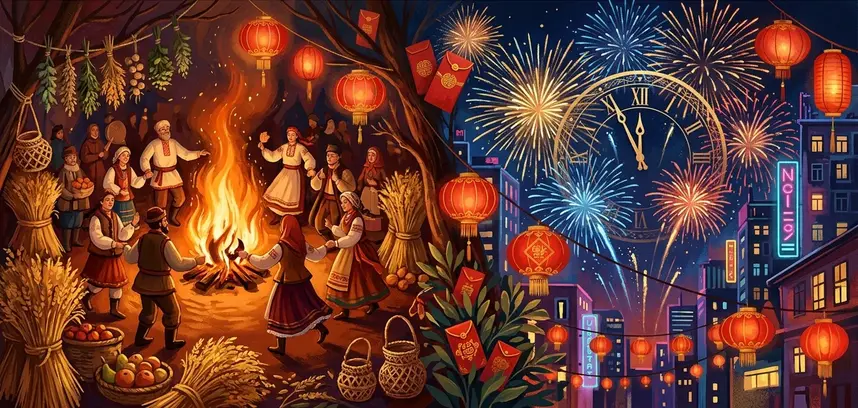
January 1st feels like the obvious, universal start of the year, but it’s really just one culture’s answer to a much older question: when does a year actually begin? Long before the Gregorian calendar standardised things for most of the world, different civilisations marked the new year at completely different points, tied to harvests, moon cycles, and the changing seasons. Understanding that history also means looking beyond the Times Square countdown, to celebrations like the Celtic Samhain and the Vietnamese Tet, which mark new beginnings in ways most Western coverage of “new year” never mentions.
The Ancient Origins of New Year Celebrations
Some of the earliest recorded it celebrations date back roughly 4,000 years, to ancient Mesopotamia, where the new year was marked around the spring equinox rather than the dead of winter, tied to the timing of planting and the natural rhythm of the seasons. Many ancient cultures followed the same logic, anchoring their new year to an agricultural or astronomical event that actually meant something locally, rather than a fixed date on an abstract calendar.
The January 1st start date most of the world uses today has Roman roots, refined further when the calendar was reformed in the late 16th century to correct drift against the solar year. That reformed calendar spread gradually and unevenly, some countries adopted it centuries after others, which is part of why a handful of cultures still calculate their new year by a completely different system altogether.
Why the New Year Doesn’t Fall on the Same Day Everywhere
Not every culture uses a solar calendar the way the Gregorian system does. Lunar and lunisolar calendars, which track the moon’s cycle either on their own or alongside the sun, place the new year on a different date each solar year, which is why celebrations like Lunar it or Tet shift around late January to mid-February depending on the year. Seasonal and agricultural calendars, like the one behind Samhain, anchor the new year to a point in the farming or seasonal cycle instead of a fixed calendar date at all.
Samhain: The Celtic New Year
Samhain (pronounced roughly “sah-win”) is an ancient Celtic festival marking the end of the harvest season and the start of winter, celebrated around the end of October into early November. For the Celts, this transition point was treated as the turning of the year itself, making Samhain, in effect, the Celtic it, a moment when the old agricultural year closed and the new one began.
Samhain was closely tied to the idea that the boundary between the world of the living and the world of the dead grew thin during this period, which is why the festival involved bonfires, offerings, and rituals believed to honour or ward off spirits and ancestors. Many of the customs now associated with modern Halloween, costumes, bonfires, and the general theme of spirits crossing over, trace directly back to Samhain traditions, even though the holiday’s meaning as a genuine new year marker has largely faded from popular awareness.
Tet: The Vietnamese Lunar New Year
Tet Nguyen Dan, usually shortened to Tet, is the Vietnamese it and by far the most important holiday on the Vietnamese calendar. Timed to the lunar calendar, Tet typically falls between late January and mid-February, moving each year the way other lunar it celebrations do, which is why searches for an exact date update annually rather than staying fixed.
Tet is built around family reunion and honouring ancestors. In the lead-up, homes are thoroughly cleaned and debts are often settled, based on the belief that starting the new year burdened by old mess or old debt invites bad luck.
Traditional customs include preparing special foods such as banh chung, a sticky rice cake wrapped in leaves, decorating homes with specific it flowers, and giving lucky money in red envelopes to children and elders as a wish for prosperity in the year ahead. Many businesses and families also avoid certain actions during the first days of Tet, such as sweeping the floor or arguing, out of a belief that early actions in the new year set the tone for what follows.
How Western New Year Traditions Developed
The New Year’s Eve countdown familiar to much of the West, fireworks, a midnight toast, and a fresh set of resolutions– is a relatively modern layer on top of a much older tradition. Public countdown celebrations in major cities became widespread in the 20th century, turning what was once a quieter, more domestic occasion into a large shared public event broadcast to huge audiences.
Food traditions also cluster around the idea of luck: dishes symbolising wealth, longevity, or a fresh start appear across many Western New Year tables, echoing the same instinct found in Tet and other it traditions worldwide, using food as a small, hopeful ritual for the year ahead.
What These Traditions Have in Common
- A clear break from the old: cleaning, settling debts, or symbolically closing out the previous cycle before the new one starts.
- Gathering with family or community: almost every new year tradition, regardless of calendar, centres on being with the people who matter most.
- Food as a small ritual: specific dishes tied to luck, wealth, or long life appear across cultures that otherwise have little else in common.
- Marking a genuine transition: whether it’s a solstice, a harvest’s end, or a fixed calendar date, every version of “it” is built around a real, felt sense of one period ending and another beginning.
The Bottom Line
New Year isn’t one universal date so much as a shared human instinct expressed in many different calendars, from the ancient Mesopotamian spring celebrations, to the Celtic turning point of Samhain, to the deeply family-centred rituals of Vietnamese Tet, to the fireworks and resolutions familiar in the West. Different dates, very similar purpose: a moment to close one chapter and open another, together with the people who matter most.
FAQs
What is the oldest known new year celebration?
Some of the earliest recorded celebrations date back roughly 4,000 years to ancient Mesopotamia, where the new year was marked around the spring equinox.
Is Samhain really the Celtic New Year?
Yes. Samhain marked the end of the harvest season and the start of winter for the ancient Celts, functioning as their turning point of the year.
Why does Tet fall on a different date each year?
Tet follows the lunar calendar, so its date shifts each solar year, typically landing somewhere between late January and mid-February.
Why do so many cultures eat specific foods on New Year?
Many cultures share the belief that certain foods, symbolising luck, wealth, or long life, set a positive tone for the year ahead, even though the specific dishes differ widely.
Do all cultures celebrate the new year on January 1st?
No. Many cultures follow lunar, lunisolar, or seasonal calendars, so their new year lands on a different date than the Gregorian calendar’s January 1st.
