
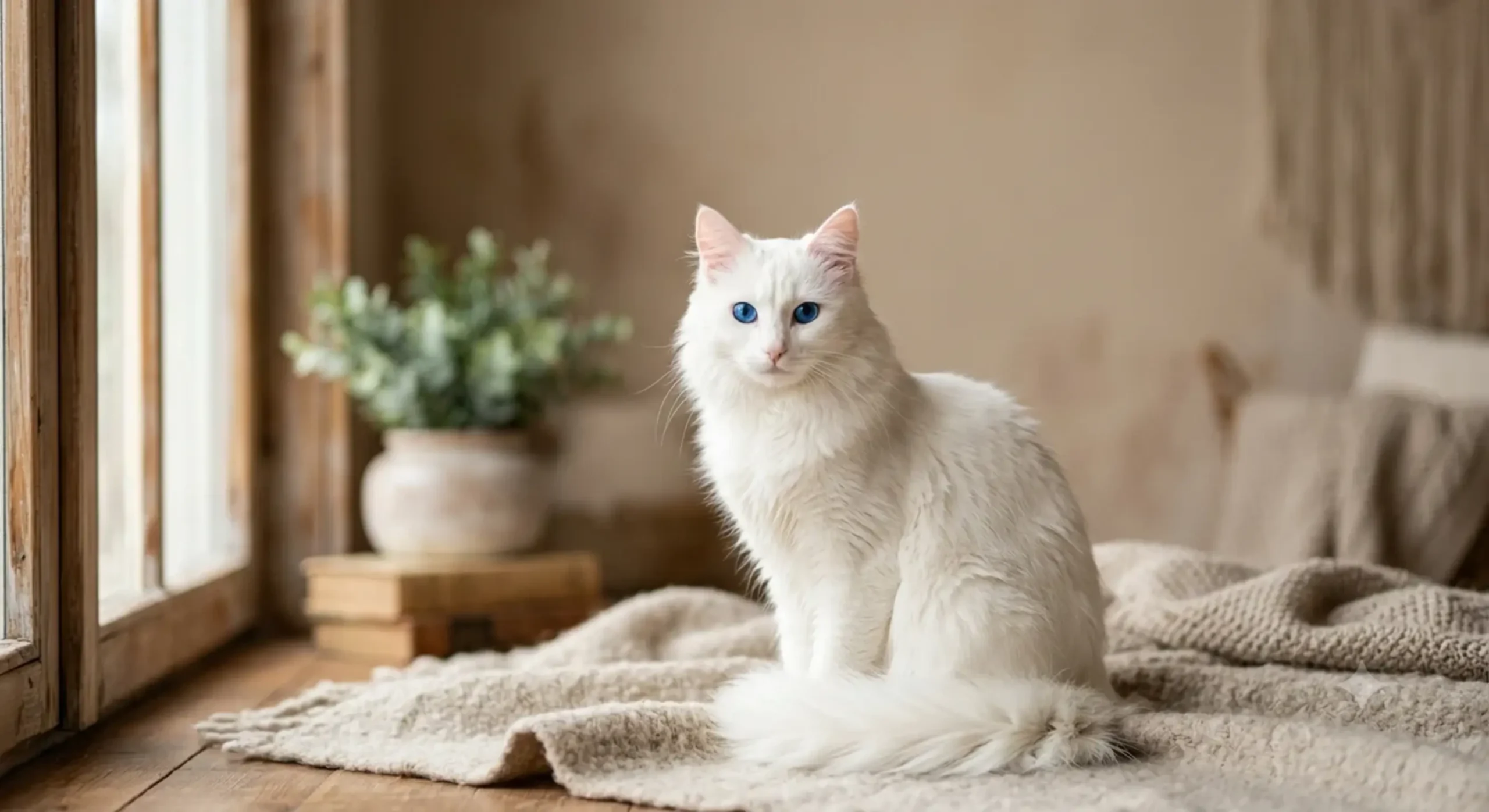
Turkish Angora Cat: History, Personality, Care, and Price Guide
Long before white, silky-coated cats became a fixture of cat shows and Instagram feeds, the Turkish Angora was already centuries into its reputation as one of the most elegant, intelligent, and mischievous breeds in the world. Here’s a complete look at where the breed comes from, what it’s actually like to live with one, and what it costs to bring one home.
Origin and History of the Turkish Angora
The Turkish Angora traces its roots to Ankara, Turkey, historically known as Angora, making it one of the oldest natural cat breeds still recognised today. Its long, silky coat developed as a natural genetic mutation rather than through deliberate breeding, and written references to the breed date back centuries, with European mentions appearing as early as the 1500s.
As the breed’s popularity grew across Europe in the 1800s and early 1900s, Turkey came to view the pure white Turkish Angora, especially individuals with blue, amber, or odd-coloured eyes, as a national treasure. Ankara Zoo eventually ran a dedicated breeding and preservation program specifically to protect the purest bloodlines, and for a long time export of these cats was tightly restricted. The breed reached the United States in the 1950s and 60s, when American military personnel stationed near Ankara encountered them, eventually leading to a small number of cats being brought to the U.S. to found the American breeding lines.
What Does a Turkish Angora Look Like?
Turkish Angoras are medium-sized cats with a slender, fine-boned, athletic build rather than the stockier frame seen in some other longhaired breeds. Their coat is long, silky, and single-layered, which actually makes it more resistant to matting than many double-coated longhaired breeds. Their large, almond-shaped eyes come in blue, green, amber, or a striking odd-eyed combination of two different colours, and their long, plumed tail is one of their most recognisable features. Slightly longer hind legs give them a light, almost balletic way of moving.
Coat Colors and Patterns
While the solid white Turkish Angora remains the breed’s most iconic look, major cat registries recognise dozens of color and pattern variations, including:
- Solid colors: white, black, blue, red, and cream
- Tabby patterns: classic, mackerel, spotted, and ticked, in various base colors
- Tortoiseshell and calico: mottled or patched combinations of black, red, and cream
- Bi-color: white paired with one additional solid color
- Smoke and shaded coats: a lighter undercoat with darker tipping for a shimmering effect
- Pointed patterns: darker face, ears, tail, and paws, similar in style to Siamese markings
Personality and Temperament
- Highly intelligent: Turkish Angoras are known for figuring out door handles, cabinet latches, and even taps, so puzzle toys are a genuine necessity, not a luxury.
- Affectionate on their own terms: they bond closely with their favorite person but generally aren’t fans of being held or cuddled for long stretches.
- Playful well into adulthood: many retain kitten-like energy and curiosity for years, and some genuinely enjoy playing in water.
- Vocal and social: they communicate often with soft, chirpy vocalizations, and tend to want to be wherever the household activity is.
- Confident around other pets: with early socialisation, they typically get along well with children, other cats, and dogs, and often take charge as the assertive one in a multi-pet household.
Health Considerations
Like most purebred cats, Turkish Angoras carry a handful of breed-linked health risks worth knowing about before you bring one home. White cats with blue or odd eyes have a notably higher risk of congenital deafness, which can be confirmed through BAER hearing testing in kittens. The breed can also be prone to hypertrophic cardiomyopathy (HCM), a heart condition that benefits from regular veterinary cardiac screening, and a rare hereditary ataxia affecting movement has been documented in some bloodlines. White individuals also need to stay primarily indoors to avoid sunburn and skin cancer risk on unpigmented skin. As with any purebred cat, routine annual vet visits, core vaccinations, and parasite prevention remain the baseline of good care.
Grooming and Daily Care
- Coat care: a weekly brush with a fine-toothed comb is usually enough, increasing to twice weekly during heavier seasonal shedding.
- Bathing: occasional baths help keep the coat pristine, especially for white cats, and many Turkish Angoras genuinely don’t mind water.
- Dental and ear care: regular tooth brushing and a weekly ear wipe-down go a long way toward preventing common issues.
- Nail trims: every few weeks keeps claws from snagging on their coat or furniture.
- Diet: a high-quality, life-stage-appropriate cat food, ideally AAFCO-approved, supports their lean, athletic build without encouraging excess weight.
- Exercise: plan for 30 to 60 minutes of active play daily, plus vertical spaces like cat trees, since they love height as much as movement.
Turkish Angora Price: What to Expect
- Pet-quality kittens: roughly $500 to $1,500 in the United States.
- Show-quality or odd-eyed kittens: often $1,000 to $2,500 or more, depending on pedigree and coloring.
- Retired show cats or breeding cats: typically $50 to $400.
- Adoption or rescue: usually $50 to $200, though purebred Turkish Angoras are relatively uncommon in shelters.
Prices vary by breeder reputation, pedigree, and coat or eye coloring, and costs in Europe tend to fall in a broadly similar range once converted.
Are Turkish Angoras Good Pets?
The Upsides
- Loyal and affectionate, often forming a strong bond with one particular person
- Playful and entertaining well into adulthood
- Generally good with children and other pets when socialised early
- A relatively low-maintenance single-layer coat despite its glamorous look
- A long lifespan, typically 12 to 18 years, for a lasting companionship
The Challenges
- High energy that demands real daily engagement, not a low-key lap cat
- Not big fans of prolonged cuddling or being picked up
- A dominant streak that can need managing in multi-pet homes
- Breed-linked health risks, including a higher chance of deafness in certain coat and eye combinations
FAQs
What is a Turkish Angora?
An ancient, naturally occurring cat breed originating in Ankara, Turkey, known for its long silky coat, slender build, and lively, intelligent personality.
How much does a Turkish Angora cat cost?
Typically $500 to $1,500 for a pet-quality kitten in the U.S., with show-quality or odd-eyed kittens often priced from $1,000 to $2,500 or more.
Are Turkish Angora cats good pets?
Yes, for owners who can match their energy and provide regular play and mental stimulation, though they aren’t the best fit for anyone wanting a quiet lap cat.
Do Turkish Angora cats shed a lot?
Their single-layered coat sheds less than many longhaired breeds and resists matting, though shedding does increase seasonally.
What is the lifespan of a Turkish Angora cat?
Typically 12 to 18 years with proper veterinary care and a healthy lifestyle.